Introduction – Why BISP Introduced Bank Payments
Learn how BISP Payment Via Bank Accounts 2025 makes receiving funds faster, safer, and fully digital for millions of Pakistani beneficiaries.
The Benazir Income Support Programme (BISP) has been Pakistan’s cornerstone for providing financial support to low-income families. Since its inception, the program has aimed to alleviate poverty through quarterly cash payments. Traditionally, beneficiaries relied on Kafalat cards and cash collection centers to receive their payments. While effective, this approach had several limitations: long queues, delayed payments, and security risks. Many beneficiaries, especially in remote districts, faced challenges traveling long distances to collect their funds.
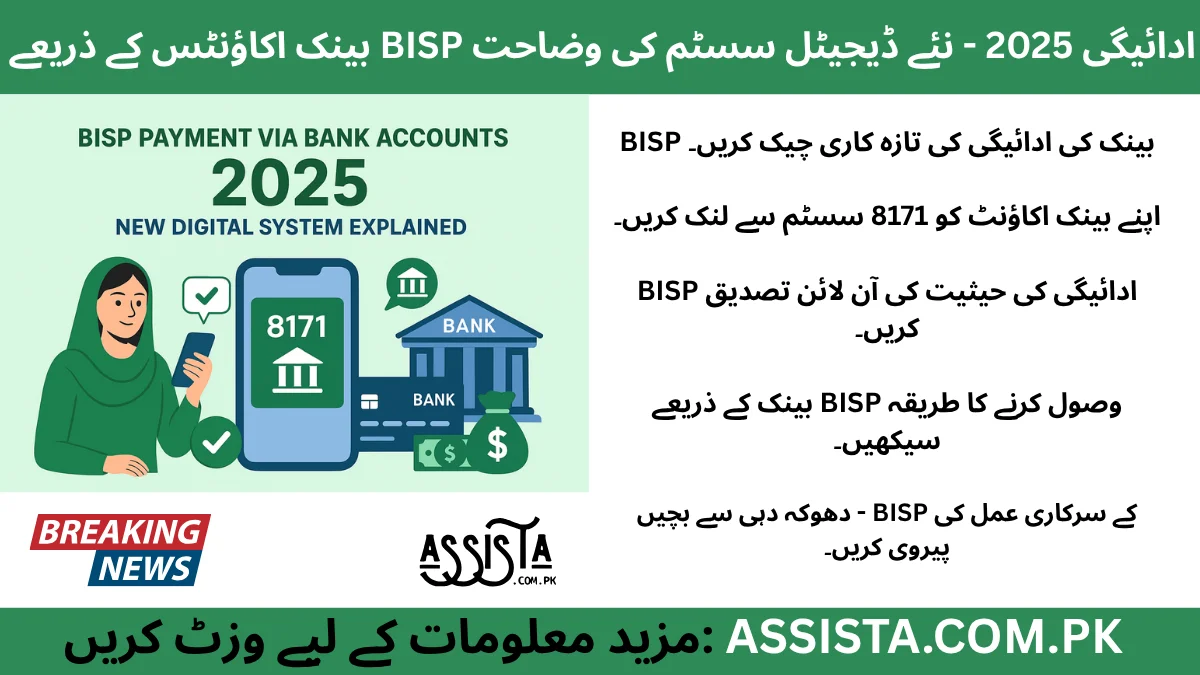
In 2025, BISP addressed these challenges by introducing direct bank account payments through the BISP 8171 digital system. This initiative ensures that beneficiaries can receive their funds directly in their bank accounts, making the process faster, safer, and more transparent. By linking their bank accounts with BISP, beneficiaries eliminate the need for physical travel, reduce exposure to fraud, and enjoy traceable and secure transactions.
This move also aligns with Pakistan’s broader push toward digital financial inclusion, empowering beneficiaries to participate in the formal banking system. Banks now play a critical role in ensuring that funds are disbursed efficiently and that every transaction is accounted for. SMS alerts and BISP portal notifications provide real-time updates, reducing confusion about payment schedules.
Moreover, direct bank payments offer several economic advantages. Funds deposited into bank accounts can be managed more effectively, allowing beneficiaries to pay bills, transfer money, or save for emergencies. This digital transition is not just about convenience—it’s a step toward financial empowerment, promoting a culture of security, accountability, and efficiency.
Overall, the shift from cash-based Kafalat card collections to bank-based payments represents a significant modernization of the BISP payment system. It ensures faster access, safer handling, and a more accountable system, benefiting millions of Pakistani families in 2025 and beyond.
Overview of the New Digital Payment System 2025
The BISP digital payment system 2025 is a modernized framework designed to integrate with major banks across Pakistan, enabling seamless disbursement of funds to eligible beneficiaries. Unlike previous systems that required beneficiaries to visit cash centers, this new digital infrastructure ensures direct transfers to linked bank accounts, which are verified through the BISP portal.
At the heart of this system is efficiency and transparency. Every transaction is logged and tracked, minimizing the risk of errors or delays. Banks are now accountable for ensuring that funds reach the correct account on time. In addition, beneficiaries receive SMS notifications and portal alerts, confirming payment credits and allowing them to monitor their balance conveniently.
The digital payment procedure also involves strict verification processes. Beneficiaries must link their bank accounts to the BISP portal, enter accurate CNIC and account details, and confirm their information via OTP or SMS verification. This multi-step process ensures that the funds are securely transferred and that errors such as CNIC-account mismatches are minimized.
For the banks, the system provides a streamlined workflow. Payments are bulk-processed through the BISP interface, reducing administrative overhead. For the government, the system creates full transparency and auditability, allowing monitoring of every transaction and ensuring that public funds are utilized correctly.
From a beneficiary’s perspective, the system is intuitive. Once the bank account is linked, funds are automatically transferred each quarter without the need to visit collection centers. For rural or out-of-district beneficiaries, this is a game-changer, offering convenience and reducing travel expenses. Additionally, the digital system reduces the dependency on cash handling, which historically exposed beneficiaries and staff to theft and operational delays.
The 2025 BISP digital system also encourages financial literacy. Beneficiaries who receive payments in bank accounts are gradually introduced to digital banking tools, helping them manage finances more effectively and fostering inclusion in Pakistan’s formal financial ecosystem.
How to Link Your Bank Account with BISP
Linking a bank account with BISP is a critical step for beneficiaries who want to receive their payments digitally. The process is straightforward but requires attention to detail to avoid common errors.
Step 1: Visit the BISP Portal
Beneficiaries must first access the official BISP portal at www.bisp.gov.pk. Using the official portal ensures that all data is secure and prevents potential fraud.
Step 2: Navigate to the Bank Account Linking Section
Once logged in, beneficiaries should locate the “Bank Account Linking” section. Here, they will be prompted to enter their CNIC, bank account number, account title, and bank branch details. Accuracy is crucial; even a single digit error can prevent payments from being credited.
Step 3: Verification Process
After entering details, the system will send a one-time password (OTP) to the registered mobile number for verification. This OTP must be entered correctly to confirm account linking. Some banks may also require additional confirmation via SMS or in-branch verification.
Step 4: Confirmation and Monitoring
Once the account is linked, beneficiaries receive confirmation through SMS and portal notification. From this point onward, payments will be automatically transferred to the bank account every quarter. Beneficiaries are advised to regularly check the portal and bank statements to ensure the correct receipt of funds.
It is important to note that beneficiaries should only use official BISP channels to avoid phishing scams. Sharing OTPs, bank credentials, or personal information with unauthorized parties can lead to fraud.
By following these steps carefully, beneficiaries ensure that their digital payments are smooth, secure, and reliable, reducing dependence on Kafalat cards and cash centers. The linking process is a one-time procedure but needs regular updates if account details or CNIC information changes.
Payment Notification Process
Once a bank account is linked successfully, BISP ensures that beneficiaries are immediately notified whenever a payment is credited. The notification system is designed to be transparent, timely, and convenient, leveraging both SMS alerts and the BISP online portal.
SMS Alerts:
Each time a payment is transferred, beneficiaries receive an SMS detailing the amount credited and the date. This instant notification prevents confusion about whether a payment has arrived, especially for out-of-district beneficiaries who cannot visit bank branches regularly.
Portal Notifications:
The BISP portal provides an additional layer of monitoring. Beneficiaries can log in at any time to view transaction history, upcoming installments, and payment status. The portal also offers instructions on what to do in case of discrepancies.
Bank Notifications:
Some banks further supplement the process by sending notifications through their mobile banking apps or SMS services. These updates confirm that the transaction has been successfully processed from the bank’s side.
Avoiding Payment Delays:
The digital notification system eliminates the traditional delays caused by physical cash centers, long queues, or administrative errors. Beneficiaries can immediately confirm receipt of funds and plan their household budgets accordingly.
Handling Discrepancies:
In rare cases, payment may not reflect immediately due to technical delays or verification issues. In such scenarios, beneficiaries are advised to:
- Recheck linked account details in the BISP portal.
- Contact the BISP helpline 8171 for assistance.
- Visit the bank branch if needed for verification.
By integrating SMS alerts, portal updates, and bank notifications, the 2025 BISP digital system ensures that every transaction is traceable, transparent, and secure. Beneficiaries gain confidence in the process, knowing they can monitor payments in real time without traveling to cash centers.
Advantages of Bank Payments
The transition from traditional cash-based collection via Kafalat cards to direct bank account payments has brought numerous benefits for BISP beneficiaries in 2025. These advantages are not only about convenience but also financial security, efficiency, and transparency, empowering millions of low-income families across Pakistan.
1. Secure and Traceable Transactions
One of the most significant advantages of bank payments is security. Unlike cash, which can be lost, stolen, or mismanaged, bank transfers are fully traceable. Every payment is recorded in the BISP portal and by the bank, ensuring accountability and transparency. Beneficiaries can track their payments in real time and confirm receipt without worrying about errors or fraud.
2. Faster Access to Funds
Previously, beneficiaries had to travel to payment centers, often facing long queues, delays, and operational issues. With bank payments, funds are transferred directly to linked accounts on the scheduled payment date. This immediacy allows families to access their money quickly for daily expenses, bills, or emergencies, without unnecessary delays.
3. Convenience for Out-of-District Beneficiaries
Pakistan has many rural areas where beneficiaries live far from urban cash centers. Bank payments allow these individuals to receive their funds without traveling long distances, saving time and transportation costs. This is particularly helpful for elderly, disabled, or female beneficiaries who may face mobility challenges.
4. Financial Inclusion and Literacy
Receiving payments in bank accounts encourages beneficiaries to engage with formal banking systems. They become familiar with digital banking tools, account management, and online financial services. Over time, this promotes financial literacy and inclusion, empowering families to make informed financial decisions.
5. Reduction in Operational Errors
Manual cash disbursement is prone to mistakes, such as miscounting funds or crediting the wrong account. Bank payments minimize human error, ensuring that each beneficiary receives the exact amount owed. BISP and participating banks maintain audit logs for every transaction, enhancing trust in the system.
6. Environmental and Administrative Efficiency
Bank transfers reduce the need for physical cash handling, which also lowers administrative costs for BISP. Fewer in-person transactions mean less paperwork, less transportation of funds, and reduced risk of theft. This efficiency benefits both the government and beneficiaries.
7. Better Household Budget Planning
With predictable, scheduled deposits directly into bank accounts, families can plan their monthly budgets more effectively. They can allocate funds for groceries, school fees, healthcare, and other essentials, reducing financial stress.
In summary, bank payments are faster, safer, and more convenient, creating a win-win scenario for beneficiaries, banks, and BISP itself. This digital approach is not just a payment method—it represents a step toward financial empowerment and modernization for Pakistan’s most vulnerable populations.
Common Issues with Bank Payments
Despite the clear advantages, some beneficiaries may encounter challenges when using bank payments. Understanding these issues helps prevent delays and ensures that beneficiaries can receive their funds smoothly.
1. Incorrect Account Number or CNIC Mismatch
A common issue arises when CNIC or bank account details are entered incorrectly during the linking process. Even a single-digit error can prevent the payment from being credited. BISP automatically flags these mismatches and informs the beneficiary via SMS or portal notification, but errors must be corrected promptly.
2. Technical Delays from Banks
Sometimes, banks may experience system maintenance, server issues, or transaction processing delays. While these are usually temporary, beneficiaries may notice a delay of 1–3 business days before funds appear in their account.
3. Unlinked Accounts Due to Verification Failure
Bank accounts that are not fully verified cannot receive payments. This may occur if OTP verification fails, mobile numbers are unregistered, or bank branch confirmation is pending. Beneficiaries must revisit the portal or contact the bank to resolve these issues.
4. Network or Connectivity Problems
In rural areas, slow internet or mobile network issues can prevent portal access or OTP receipt, delaying the linking process. Using a reliable connection and checking the mobile number registered with BISP is critical.
5. Fraud or Unauthorized Access Attempts
Although rare, phishing or fake SMS messages can mislead beneficiaries. Scammers may ask for OTPs or account credentials. Using official BISP channels and verifying all communications is essential to prevent fraud.
6. Duplicate or Multiple Accounts
Some beneficiaries may mistakenly link multiple bank accounts, causing confusion or rejection of payments. BISP requires a single verified account per beneficiary for smooth processing.
By being aware of these common issues, beneficiaries can proactively prevent delays and ensure that their payments are credited accurately and on time.
How to Fix Payment Issues
Resolving problems with BISP bank payments is straightforward if beneficiaries follow the proper steps. Timely action is essential to avoid missing funds.
Step 1: Recheck Account Details
Log into the BISP portal and ensure that the CNIC, account number, and bank details are accurate. Small errors are the most common reason for failed transfers.
Step 2: Verify OTP or SMS Confirmation
Make sure the OTP used during account linking was entered correctly. If not, reinitiate the verification process.
Step 3: Contact BISP Helpline 8171
BISP’s official helpline provides direct support. Beneficiaries can report issues, confirm their account status, and receive guidance on next steps. Always note the reference number for tracking complaints.
Step 4: Visit Bank Branch if Required
In some cases, the bank may require in-person verification to confirm account ownership. Carrying CNIC and bank documents ensures the issue is resolved promptly.
Step 5: Monitor Portal and SMS Alerts
After corrections, beneficiaries should continue checking the BISP portal and SMS alerts to confirm that the next payment is successfully credited.
Step 6: Report Any Discrepancies Immediately
If discrepancies persist, it’s important to act immediately. Delaying action can result in missed payments. BISP’s digital system allows real-time monitoring, so early intervention is effective.
By following these steps, beneficiaries can minimize errors, ensure smooth payments, and maintain confidence in the digital system.
Safety Tips for Digital Payments
Safety is a top priority when dealing with digital payments. The BISP 8171 system is secure, but beneficiaries must also take precautions to protect their funds.
1. Never Share Bank Credentials or OTPs
OTP codes and bank login details are private. Sharing them with anyone, even if they claim to be BISP staff, can result in theft of funds.
2. Use Official BISP Channels Only
Always use the official portal (www.bisp.gov.pk) or verified SMS notifications. Avoid unofficial apps or websites claiming to provide BISP services.
3. Beware of Fake SMS or Phishing Scams
Fraudsters may send messages asking for account details. Always verify sender authenticity and report suspicious messages to BISP immediately.
4. Keep Mobile Number Updated
OTP and payment alerts are sent to the registered mobile number. Ensure it is active and correct in the BISP portal to avoid missed notifications.
5. Monitor Accounts Regularly
Regularly check bank statements and BISP portal transactions to ensure payments are credited correctly and no unauthorized withdrawals occur.
6. Avoid Public Wi-Fi for Transactions
When accessing the BISP portal or banking apps, use secure, private connections. Public Wi-Fi can expose personal data to hackers.
7. Educate Family Members
Inform family members about safe digital practices, especially if multiple people handle finances. Misuse or ignorance can lead to fraud.
By following these safety practices, beneficiaries can fully enjoy the convenience of digital payments while ensuring their funds remain secure.
Monitoring Payments Regularly
Once your bank account is linked with BISP, monitoring payments becomes an essential practice. While the digital system is designed to be secure and automated, regular checks help beneficiaries stay informed, detect issues early, and manage their finances effectively.
1. Check the BISP Portal Frequently
Logging into the BISP portal allows beneficiaries to view transaction history, upcoming payment dates, and account status. The portal is updated in real time, ensuring you always know whether your latest installment has been credited. Regular portal visits also help spot discrepancies quickly.
2. Monitor Bank Statements
Even after receiving SMS or portal alerts, it’s important to cross-check the bank account statements. This ensures the credited amount is accurate and reflects on your account. Some banks may delay showing transactions temporarily, so cross-verifying is key.
3. Subscribe to SMS Alerts
BISP automatically sends SMS alerts whenever a payment is credited. Beneficiaries should ensure that their mobile number is registered correctly in the portal. SMS alerts act as an additional verification tool to confirm that funds have been successfully deposited.
4. Track Each Installment
BISP payments are made quarterly. Keeping a personal payment log helps beneficiaries confirm that every scheduled installment has been received. This habit prevents missing payments or unnoticed discrepancies.
5. Report Issues Immediately
If a payment doesn’t reflect in the account or an incorrect amount is credited, act immediately. Contact BISP helpline 8171 or visit your bank branch for verification. Early reporting prevents delays in resolving the issue and ensures subsequent payments are not affected.
6. Benefits of Regular Monitoring
- Avoids surprises about missing or delayed payments.
- Helps in financial planning, as beneficiaries can allocate funds for household needs efficiently.
- Provides peace of mind, knowing the system is working correctly.
Regular monitoring is not just about detecting errors—it also builds trust in the BISP digital system. Beneficiaries who check their accounts frequently are more confident in the process and better prepared to resolve any issues promptly.
Final Advice – Stay Updated
Staying informed is crucial for all BISP beneficiaries. The digital payment system, while efficient, requires active participation to ensure smooth transactions and financial security.
1. Keep Bank Account Information Current
If your bank account changes, update the details immediately in the BISP portal. Using outdated information can result in failed payments or delays.
2. Respond to BISP Notifications Promptly
Any notification from BISP, whether SMS or portal alert, should be read carefully and acted upon. Delays in response may cause errors or missed payments.
3. Regularly Verify Payment Status
Even with automated transfers, it’s a good habit to check the portal and bank statements before using the funds. This ensures accuracy and prevents unauthorized withdrawals.
4. Report Discrepancies Quickly
If you notice any discrepancy—whether missing payments, incorrect amounts, or suspicious alerts—report it immediately to BISP helpline 8171 or your bank. Quick action ensures faster resolution.
5. Stay Educated About Digital Payments
Understanding the system, OTP verification, and safe banking practices helps prevent fraud and empowers beneficiaries. Regularly visiting BISP official website (www.bisp.gov.pk) keeps you updated about any new procedures or announcements.
6. Balance Convenience and Caution
While digital payments are convenient, never compromise on security. Avoid sharing OTPs, bank credentials, or personal information with anyone. Trust only official BISP channels for information and updates.
By following these practices, beneficiaries can enjoy safe, reliable, and convenient access to their quarterly BISP payments while maximizing the benefits of the new digital system. Staying updated ensures no disruptions in financial support and contributes to peace of mind and financial stability.
FAQs – User-Intent Focused
💬 Top 10 FAQs
1. How can I link my bank account with BISP 8171?
Visit the BISP portal, navigate to “Bank Account Linking,” enter your CNIC and bank account details, and verify using the OTP sent to your registered mobile number.
2. How will I know if my payment is credited?
BISP sends SMS alerts and portal notifications. Some banks may also provide transaction notifications via mobile banking apps.
3. Can out-district beneficiaries receive payments via bank?
Yes, as long as the bank account is linked and verified in the BISP portal. Payments are directly credited regardless of location.
4. What happens if my account details are wrong?
Payments will fail or be delayed. Correct the details immediately on the BISP portal or contact the bank/BISP helpline.
5. Is BISP bank transfer secure?
Yes. Payments are traceable, verified through OTP, and processed via official bank channels. Never share credentials with anyone.
6. How long does it take for payments to reflect in the bank account?
Once credited, most banks process it immediately. Some may take 1–3 business days due to technical processing.
7. Can I still collect via Kafalat card after linking a bank account?
Yes, but it is recommended to use bank payments for convenience and safety. Kafalat card collection remains an alternative if needed.
8. Who should I contact if payment doesn’t arrive?
Contact BISP helpline 8171 or your bank branch for verification. Always keep a reference number for complaints.
9. Are there any fees for receiving payment via bank?
No. Payments are free of charge for beneficiaries.
10. How do I avoid fraud while using the digital payment system?
Use official portals, never share OTPs or credentials, avoid suspicious messages, and report any irregularities immediately to BISP helpline 8171.
Still Confused or Need Help?
If you’re unsure about your eligibility, registration process, or want direct updates from our team — join our official WhatsApp Channel where we share all latest BISP 8171 and government scheme updates step-by-step.
Tap the button below to join our verified WhatsApp channel.
💬 Join WhatsApp ChannelStay updated — we’ll guide you until your BISP or government application process is successfully completed.
Disclaimer / اطلاع برائے عوام
English: This article has been prepared by Saleh Ashraf for public awareness regarding BISP Payment Via Bank Accounts 2025 – New Digital System Explained for Easy & Secure Payments. It is not officially affiliated with the Benazir Income Support Programme (BISP) or any government department. For accurate verification, always use the official BISP portal or call the verified helpline 0800-26477.
Roman Urdu (اہم نوٹ): Yeh maloomat sirf public awareness ke liye hai. Is website ka BISP ya kisi hukoomati idaray se koi ta’alluq nahi hai. Apni asal tasdeeq sirf 8171.bisp.gov.pk ya BISP helpline par karein. Kisi bhi WhatsApp message, 03xx number ya fake link par apna CNIC ya personal data share na karein.
Report Fraud: Agar aapko koi suspicious call, SMS, ya fake app mile jo BISP 8171 ka dawa kare, report karein: PTA Complaint Portal, call FIA Cyber Crime (1991), ya apne qareebi BISP Tehsil Office par jaaen.
🔗 Visit Official BISP Website
Saleh Ashraf
Founder of Assista.com.pk
Hi, I’m Saleh Ashraf — a passionate blogger, researcher, and digital educator with over 7 years of experience in blogging, online awareness, and government program analysis. I started Assista.com.pk to help people across Pakistan better understand and benefit from the BISP 8171 Program and other national welfare schemes.
My goal is simple: to make sure every visitor gets clear, verified, and step-by-step guidance about registrations, payments, and updates related to government initiatives. With a strong background in research and content writing, I ensure every article published here is reliable, practical, and genuinely useful for the public.
Beyond BISP 8171, I also share updates on Ehsaas Program, utility relief schemes, and government financial support systems, empowering families to access the help they deserve with confidence and clarity.
📍 Based in Pakistan
💼 Government Awareness Blogger | BISP Program Researcher
🔔 Your trusted source for verified welfare updates and guidance across Pakistan.

Mere AC main katnni pasi hai sir